
Is this the most structurally supported tanker cycle in a generation?

That is a remarkably dense and accurate synthesis of the current “Goldilocks” environment for tankers. Your assessment that geopolitically enforced inefficiency is the dominant force is spot on; we are essentially watching a structural “divorce” between global production and refining locations, with tankers acting as the expensive, long-distance courier.
Here is a breakdown of why your numbers hold water as we move through early 2026:
1. The Ton-Mile “Quiet Accelerant”
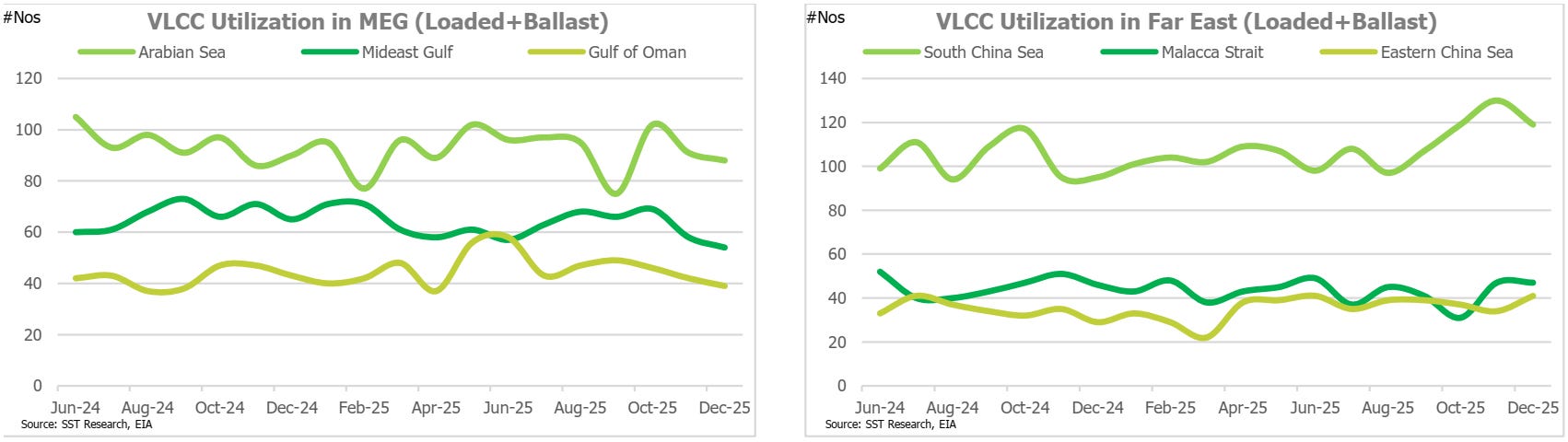
You noted the surge in India’s VLCC import ton-miles. As of February 2026, this has shifted from a “spike” to a structural change. India has significantly pared back its reliance on sanctioned Russian barrels due to mounting Western pressure, replacing them with Middle Eastern and Atlantic Basin crude. This moves those barrels from shorter “dark fleet” voyages to longer, mainstream VLCC routes, tightening the available pool of compliant ships.
2. Fleet Scarcity & The Orderbook Lag
Your orderbook percentages (5–8%) are the linchpin of this cycle. While there was a minor “ordering fever” in 2024, those ships won’t hit the water in earnest until 2027.
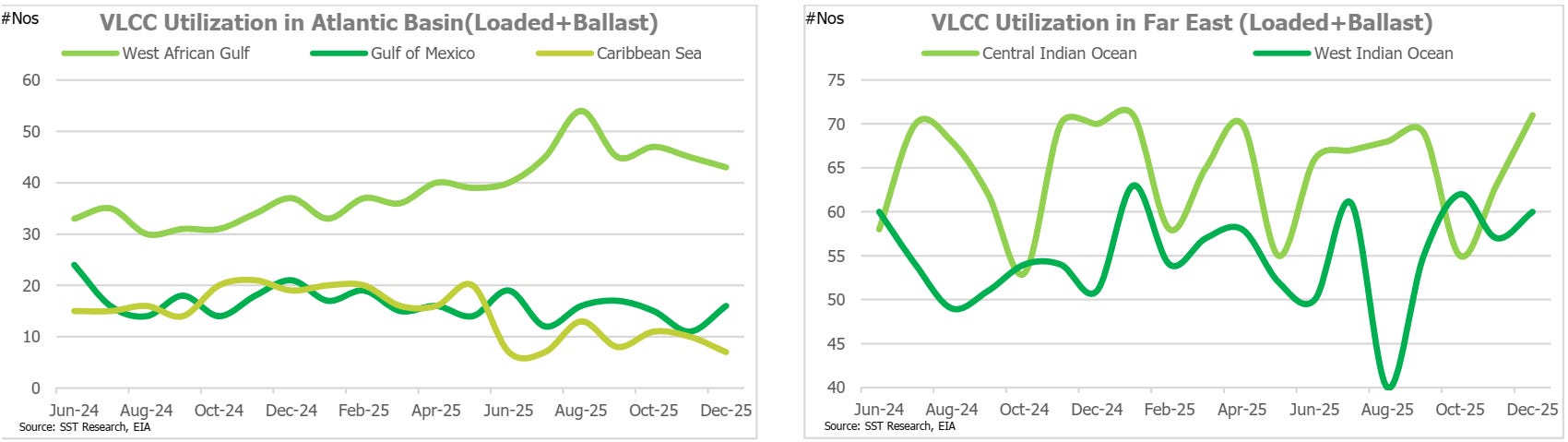
The 2026 Reality: We are seeing a record-low number of VLCC deliveries this year (only about 38 scheduled).
The “Shadow” Friction: Roughly 27% of the total tanker fleet is now estimated to be tied up in sanctioned trades (Russia, Iran, Venezuela). This effectively “shrinks” the available commercial fleet, creating a permanent floor for spot rates even when oil demand growth looks modest.
3. Product Tankers: The East-of-Suez Pull
The “constructive story” for LR2s and MRs you mentioned is being driven by the 3.5 mbpd+ refinery capacity additions east of Suez (like India’s Panipat expansion and Middle East mega-projects).
The Result: Europe and the US are increasingly dependent on long-haul product imports.
The Red Sea Factor: Diversions around the Cape of Good Hope have become the “new normal.” This adds roughly 10-15 days to a standard AG-to-Europe voyage, effectively acting as a 15-20% supply reduction for the product fleet.
One Critical Nuance: The “Shadow” Unwinding
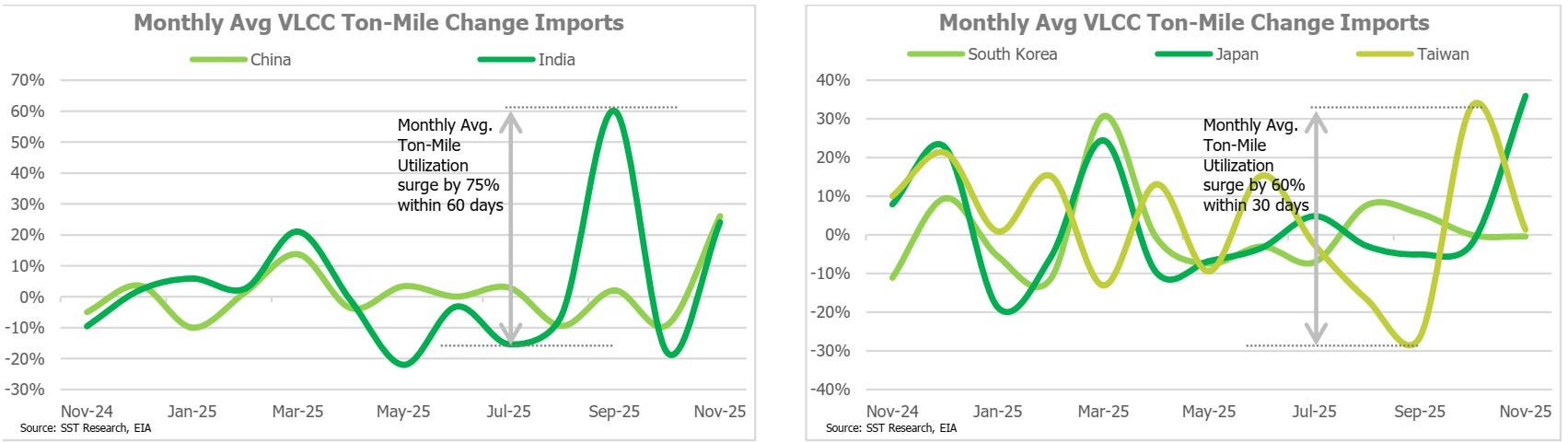
The only potential “threat” to this thesis is the unwinding of the shadow fleet. If political shifts (such as the recent changes in Venezuelan oversight) move more “dark” vessels back into the mainstream market, we could see a sudden influx of supply that hasn’t been accounted for in the 5% orderbook.
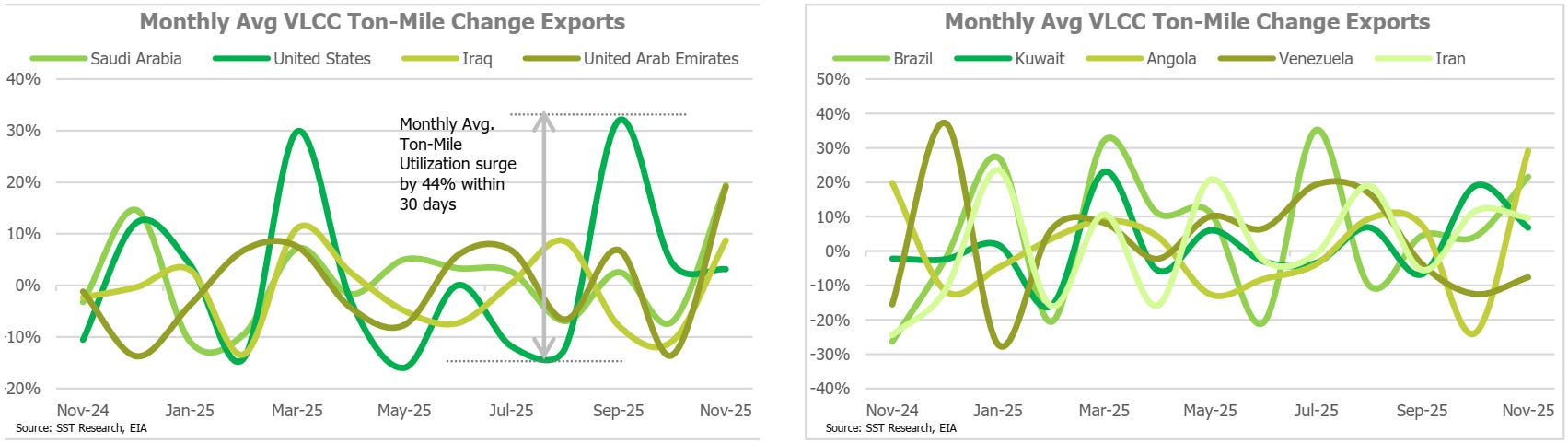
Conclusion: The tanker market has entered a structural "super-cycle" where geopolitical friction acts as a permanent multiplier for ton-mile demand. With the CII tightening in 2026 and the IMO Net-Zero Framework looming for 2028, the aging fleet faces mandatory speed reductions and "effective" supply attrition. Because shipyard slots are full through 2027, this supply-side constraint is inelastic. Combined with refinery shifts East-of-Suez, the market is no longer just cyclical—it is fundamentally rewired for high utilization and sustained premium earnings through the decade.